


DailyStory - Stories & Dramas
STAR READING LIMITED
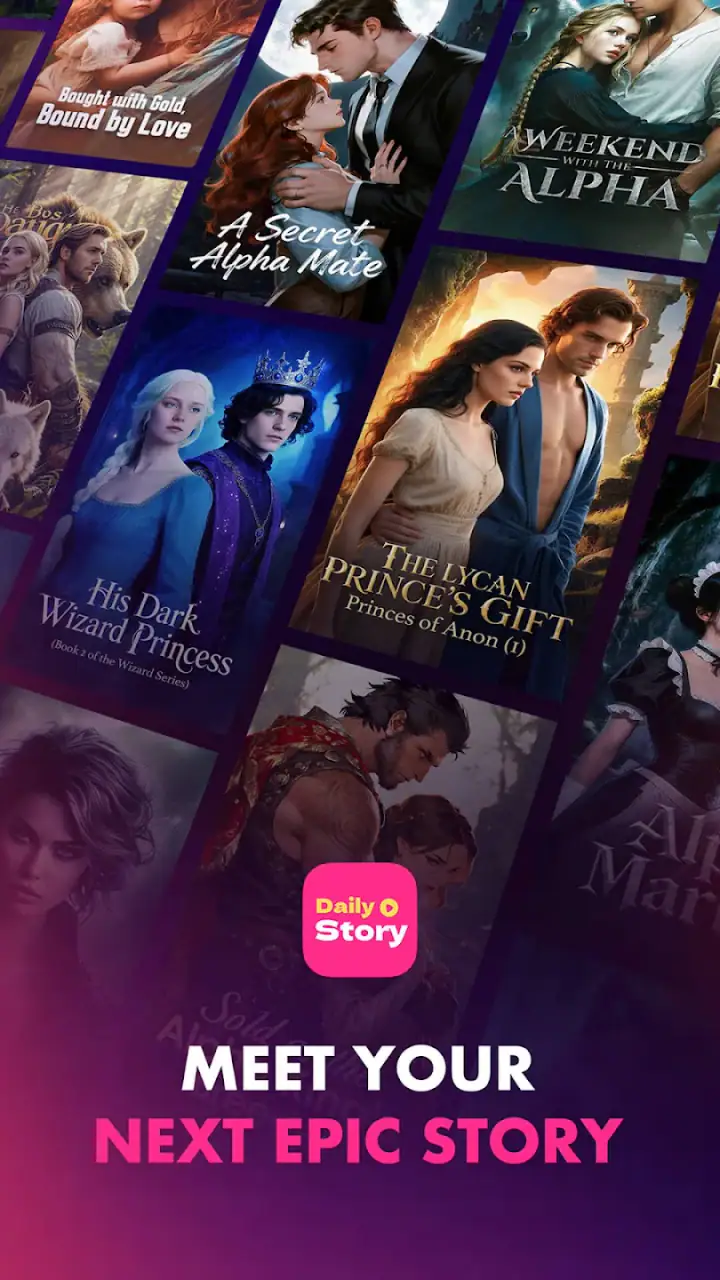
DailyStory - Stories & Dramas is a free reading app from STAR READING LIMITED that focuses on romantic and fantasy fiction delivered through short, dramatic episodes. I approached it less like a traditional ebook library and more like a pocket serial: something to open for a few minutes, follow a cliffhanger, and return to when I wanted an easy emotional escape. That distinction matters, because its appeal depends on whether you enjoy ongoing stories rather than complete books that you can finish at your own pace.
My first impression was positive. The app is easy to understand, and the combination of relationship drama, fantasy settings, and frequent story progression gives it an immediate reason to come back. At the same time, I would not mistake it for a general-purpose reading service. The mature audience rating, the episodic presentation, and the possibility of in-app spending make it better suited to readers who already like serialized romance than to someone searching for a broad, quiet bookshelf.
Why the first week feels so inviting
The strongest part of the experience is the low effort needed to begin. Instead of deciding which long novel to commit to, I can sample a story and quickly learn whether its characters, tension, and tone work for me. That makes the app particularly comfortable during small gaps in the day: a commute, a lunch break, or the few minutes before sleep when I want fiction but do not want to remember a complicated plot from a previous session.
The romantic and fantasy mix also gives the catalog a useful emotional range. Romance brings personal stakes and relationship questions, while fantasy can add secrets, unusual settings, power struggles, or a sense that the characters are dealing with more than an ordinary disagreement. I found that combination more effective than a purely realistic drama when I wanted escapism, although readers who prefer literary realism may find the style too heightened.
The short-episode approach changes how I read. I am not usually settling in for a long uninterrupted chapter. I am checking in, absorbing a scene, and deciding whether the next turn is worth following. This structure is excellent for building a habit because the psychological commitment is small. The trade-off is that the writing can feel designed around momentum rather than reflection. A reader who wants carefully developed themes, spacious descriptions, or a complete arc in one sitting may feel impatient.
Related News

Why WhatsApp Messenger Still Makes Everyday Communication Feel Easy

Jurassic World: The Game Is the Better Dino Tycoon for Strategic Players

Threads in Real Life: Who Should Join, Lurk, or Leave

How SHEIN Turned Shopping Into an Endless Content Feed

How to Make Fortnite Feel Smarter on Mobile

Should You Switch to Microsoft Outlook on Mobile?
During a typical evening, I might open the app after finishing other tasks, read a few episodes, and stop at a natural pause rather than reaching a full conclusion. That routine works because the app does not demand a large block of time. It also creates a small risk: if I start several stories at once, I can quickly lose track of which emotional thread belongs to which title. My practical advice is to choose one main story first and treat other discoveries as a later reading list rather than opening everything immediately.
The app’s free entry point is important here. I can explore its basic reading experience before deciding whether it deserves a regular place on my phone. That makes the initial trial less intimidating than buying a complete ebook that turns out not to suit my taste. Still, free access should not be confused with unlimited reading at no cost. The presence of in-app purchases means I would pay attention to how quickly a story asks for additional access or currency before becoming deeply invested.
For a first-week test, I would use a simple rule: sample several premises, then continue only the one that makes me genuinely curious about the characters rather than merely surprised by the latest cliffhanger. This helps separate lasting interest from the novelty of rapid plot turns. It is also a good way to judge whether the app’s storytelling rhythm matches my patience.
Gallery
What makes the format different from ordinary ebook apps
Compared with a conventional ebook reader, DailyStory is less about owning or organizing a personal library and more about following an active stream of serialized fiction. A standard reading app is usually strongest when I already know what book I want, want flexible progress through long chapters, or prefer a finished story. Here, discovery and continuation are more central. The app is closer to a television drama released in written installments than to a digital bookshelf.
That comparison explains both its charm and its limitation. The episode format makes stopping easy, but it can also make the reading experience feel interrupted. If I am in the mood for a self-contained mystery or a carefully edited standalone novel, I would choose a normal ebook service instead. If I want romantic tension that keeps unfolding over repeated visits, this format has a clearer advantage.
The mature 17+ rating is another practical consideration rather than a decorative label. I would not hand the app to a younger reader, and I would not assume that every story has the same level of intensity simply because they share a category. Anyone sensitive to adult relationship drama should sample cautiously and decide whether the tone is comfortable before making the app part of a daily routine.
What remains valuable after the novelty fades
The real test for a serialized reading app is not whether it can hold my attention on the first day. It is whether I still have a reason to return after the opening curiosity has passed. DailyStory has a reasonable chance of doing that for readers who enjoy ongoing emotional arcs, but its long-term value depends heavily on reading discipline and selective browsing. I get more from it when I treat it as one dependable reading habit instead of an endless feed to consume without a plan.
One useful monthly habit is to keep a small mental distinction between “stories I am following” and “stories I am sampling.” Following too many at once turns reading into maintenance. I have to remember characters, conflicts, and where each plot stopped, which can make a relaxing activity feel like homework. Limiting myself to a few active stories keeps the emotional investment manageable and makes each return feel intentional.
This is one of the less obvious trade-offs of episodic fiction: the app may save time per session while increasing the memory work across weeks. A long ebook has its own continuity, but I usually read it in a more stable sequence. With serialized stories, pauses, changing reading moods, and multiple titles can create a fragmented experience. My workaround is to finish a small group of episodes from one story before browsing elsewhere, especially when the plot contains many names or parallel conflicts.
DailyStory is most useful month to month for three kinds of readers. First, it suits people who want regular romantic drama without committing to a full-length book every time they open an app. Second, it works for fantasy readers who enjoy discovering premises gradually rather than selecting one large novel from a catalog. Third, it helps busy readers maintain a fiction habit through short sessions. In each case, the value comes from repeatable access to stories, not from a single feature that transforms reading.
It is less convincing for someone who reads only occasionally and wants every session to feel complete. If I open the app once every few weeks, I may spend more time remembering unfinished plots than enjoying them. A completed ebook, audiobook, or library app would probably serve that reader better. DailyStory rewards continuity, so the best question is not whether it is free to install but whether I genuinely want an ongoing serial in my routine.
The developer, STAR READING LIMITED, has positioned the product clearly around stories and dramas rather than trying to be a universal reference tool. That focus is helpful. I know what kind of reading mood to expect, and I can decide quickly whether the app belongs in my rotation. The average rating of 4.4 from around 6 thousand ratings suggests that many users find the overall experience appealing, while the smaller pool of written feedback means I would still rely on my own sampling rather than treating the rating as a guarantee of story quality.
Handling purchases without letting the habit control you
The biggest long-term question is financial, not technical. The app is free, but its in-app purchases range from $2.49 to $299.99 per item. That wide range tells me to approach the reading experience with a budget before I become attached to a cliffhanger. I would never make a purchase simply because a story has just created urgency. Instead, I would decide how much entertainment spending feels reasonable for the month and stop when that limit is reached.
This matters especially with serialized romance, where the next episode can feel more urgent than the previous one. A practical workflow is to sample first, follow only stories that remain interesting after several visits, and avoid paying to continue every title that produces a temporary burst of curiosity. The strongest test of value is whether I would still choose the story after waiting, not whether I want the next scene immediately.
Readers should also distinguish between paying for a story they truly want to finish and paying to remove every small pause in the experience. Those are not the same decision. If the app becomes a stream of impulse purchases, its convenience stops being an advantage. If I use the free access to identify one or two stories I care about and keep spending deliberate, the model is easier to live with.
For families, the mature rating and purchase structure make supervision important. I would keep the app on an adult account, review purchase controls on the device, and avoid assuming that a free download means a risk-free environment for younger readers. That is not a criticism of the reading concept; it is simply the sensible way to handle an app aimed at mature audiences with optional paid access.
Maintenance, fatigue, and the cost of staying engaged
DailyStory does not require much technical maintenance from me, but it can require attention maintenance. The app is easy to open; the harder part is deciding what deserves continued attention. A large supply of dramatic premises can create a browsing loop in which I spend more time choosing than reading. I get better results when I enter with a specific mood, such as “I want a romantic fantasy” or “I want something light for ten minutes,” rather than scrolling without a stopping point.
Another source of fatigue is cliffhanger dependence. Suspense is useful for bringing me back, but repeated unresolved turns can eventually feel mechanical. When every session ends by withholding the next important answer, the emotional rhythm becomes predictable. I am more likely to stay with a story when the episodes include smaller moments of resolution as well as larger questions. If a title only escalates without giving its characters room to develop, I would drop it rather than continue out of habit.
Keeping a reading note can help with longer breaks. I do not mean a detailed summary; a single sentence about the main conflict and the last important change is enough. This is a surprisingly useful technique for serialized apps because it removes the friction of returning after travel, work pressure, or a change in mood. It also helps me decide whether I still care about the story, instead of continuing only because I have already invested time.
The current version is 2.1.5, and the app supports devices running Android 6.0 or later. That makes it accessible to people using older Android hardware, although the actual comfort of reading will still depend on the phone’s screen, performance, and the way the app behaves on that device. I would test it on the phone I plan to use regularly rather than assuming that compatibility alone guarantees a pleasant reading session.
Because it is a mobile reading app, I would also think about when and where I use it. Short episodes are convenient during breaks, but they can be a poor fit for moments when I need uninterrupted concentration. I would avoid opening it when I am supposed to be working or studying, particularly if I am already following a story with frequent dramatic turns. Its strength as a quick escape can become a distraction when the habit has no boundaries.
Who should skip it
I would skip DailyStory if my priority is a broad collection of nonfiction, reference material, classic literature, or complete books from different publishers. Its identity is much narrower and more entertainment-focused. I would also look elsewhere if I dislike mature romantic drama, dislike reading in installments, or feel uncomfortable with a free app that includes optional purchases.
It may also disappoint readers who judge value by pages completed rather than by regular engagement. A short episode can be satisfying, but it may not feel substantial enough for someone who wants a long, quiet reading session. In that case, an ebook reader or library service with finished novels would make better use of the same time.
Finally, I would not recommend starting it as a way to replace every other form of reading. It works best as a focused side habit: a place for romantic and fantasy serials when I want immediate drama. Keeping that role clear prevents the app from feeling repetitive and makes it easier to return without expecting it to satisfy every reading mood.
My long-term verdict on DailyStory
After the first-week excitement, DailyStory earns lasting space only when I use it selectively. Its strongest qualities are the approachable episodic format, the easy entry into romantic and fantasy stories, and the ability to turn a few spare minutes into a regular fiction habit. The free starting point lowers the barrier to trying it, while the focused category makes it clear who will enjoy it most.
Its weaknesses are equally important. Serialized reading can create continuity work, cliffhangers can become tiring, and the broad in-app purchase range calls for self-control. The app is not a substitute for a complete ebook library, and it is not the right choice for younger readers because of its mature age rating. I also would not keep every story active; doing so turns discovery into clutter.
My recommendation is to install it if you specifically enjoy romantic drama, fantasy tension, and stories that unfold over repeated visits. Give it a short trial, choose one or two promising titles, and set a spending boundary before the plot starts pressuring you. If you still look forward to returning after the initial novelty fades, it has earned a place in your routine. If you mainly want finished books, quiet reading, or a wide reference collection, another category of app will serve you better.
In my experience, the lasting value is not in opening it constantly. It is in having a clearly defined reading option for a particular mood. DailyStory works best as a deliberate serial-reading habit, not as an unlimited replacement for every book app. Used that way, it can remain an enjoyable companion rather than another source of notifications, unfinished stories, and impulse decisions.
FAQs for DailyStory - Stories & Dramas
What is DailyStory - Stories & Dramas?
DailyStory - Stories & Dramas is a mobile entertainment app focused on short-form fictional content, including serialized stories, dramatic scenes, and episodic narratives. Its format is designed for quick reading or viewing sessions, making it suitable for users who enjoy romance, suspense, emotional drama, and other story-driven genres. The available catalog and presentation may vary depending on your region and the current version of the app.
Is DailyStory - Stories & Dramas free to download and use?
The app can generally be downloaded without an upfront purchase, but access to all stories, episodes, or premium features may depend on the platform’s monetization system. Some content may be supported by advertisements, while other chapters or viewing options could require in-app purchases, subscriptions, or virtual credits. Before confirming payment, review the pricing, renewal terms, and purchase conditions shown in the app.
Does DailyStory require an internet connection?
DailyStory is primarily designed for online use, so an internet connection may be needed to load the catalog, stream content, synchronize your progress, display advertisements, and unlock episodes. Performance can depend on your Wi-Fi or mobile-data quality. If the app offers offline access, it may be limited to selected content or premium users, so check the individual story and download settings before relying on it while traveling.
What type of content can users find in DailyStory?
The app is aimed at people who enjoy compact, serialized entertainment rather than long traditional books or full-length television programs. Its stories and dramas may include themes such as romance, relationships, family conflict, mystery, suspense, and emotional twists. Because titles can differ by market and updates, users should check descriptions, ratings, and content notices to determine whether a particular story is appropriate for their age and preferences.
Is DailyStory - Stories & Dramas safe for children and does it protect privacy?
Parents should review the app’s age rating and privacy information before allowing children to use it. Story-based platforms can include mature themes, relationship content, intense situations, advertising, or links to purchases. You should also examine the permissions requested, account and login options, data-collection disclosures, and parental controls available on your device. Avoid sharing unnecessary personal information and use purchase restrictions if younger users have access.
Pros
- Short episodes make it easy to enjoy during quick breaks.
- Frequent story updates keep the content feeling fresh.
- Romance and drama themes offer plenty of emotional variety.
- Simple navigation makes discovering new stories straightforward.
- Personalized recommendations can help match stories to your interests.
Cons
- Some episodes may end on cliffhangers that require continued viewing.
- The catalog may feel limited for users seeking non-romance genres.
- Story quality can vary between different series and writers.
- Video streaming may use significant mobile data without Wi-Fi.
- Some features or episodes may require in-app purchases.


